Codice Fiscale in Italy: Step Zero Before You Register a Company
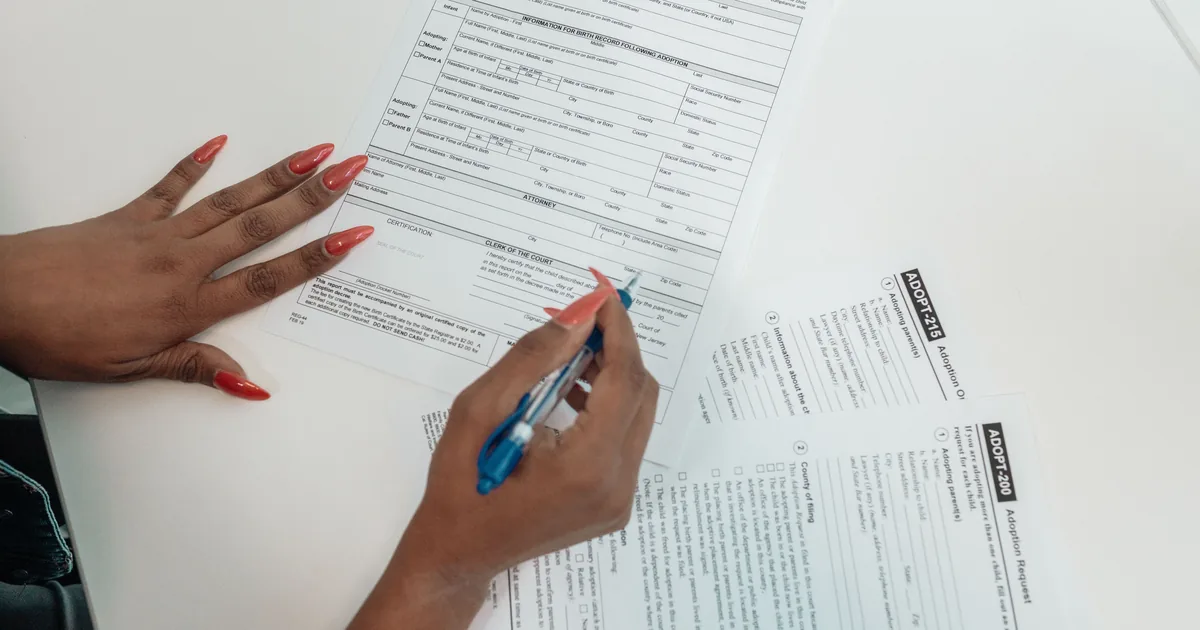
Almost every English-language guide to the Italian tax code answers the same reader: someone moving to Italy, enrolling at a university, opening a utility contract or buying a house in Tuscany. Founders read those pages and come away with the wrong model of the thing. For a company, the codice fiscale (tax code) is not an administrative convenience you pick up on arrival. Italian statute puts it in front of the notary, and the incorporation deed cannot be filed for registration without it.

By Alessandro Ferri, Tax and Accounting Lead, Rome office. Alessandro Ferri handles the tax side: what an Italian company owes, when, and on which form. He advises foreign owners on IRES, VAT registration and the reporting that follows incorporation.
Reviewed by Marta De Luca, Regulatory and Licensing Lead. Updated 9 September 2026.
Definition. The codice fiscale (tax code) is the Italian tax identification number that identifies individuals and entities other than individuals in all their dealings with public bodies and administrations. It runs to 16 alphanumeric characters for a person and 11 digits for an entity, and the Agenzia delle Entrate assigns it under D.P.R. 605/1973.
Everything below is written for the person who will sign that deed. The sequence is the point: the tax code comes first, the VAT number comes later and on entirely different forms. VAT registration on the merits, its thresholds and the routes open to a non-resident live on the VAT number guide, not here.
- Issued by: the Agenzia delle Entrate, or an Italian consulate abroad; and without any application at all by a Comune, a Sportello Unico per l'Immigrazione or a Questura.
- Legal basis: D.P.R. 29 settembre 1973, n. 605, Artt. 1–6, 11 and 13.
- Who needs one: every founder and every director of the future Italian company, resident in Italy or not, and the foreign entity that signs the deed as a shareholder.
- When you need it: before the notarial incorporation deed, not after it.
Why is a codice fiscale step zero when you register a company in Italy?
Three articles of a single statute settle the question, and none of them depends on a registrar's habit or a notary's preference. D.P.R. 605/1973 built the Italian tax registry and then attached the code to two specific documents that stand between a founder and a registered company: the application to register the notarial deed, and the application to the chamber of commerce. A fourth article stands behind both with a penalty.
Art. 6(b): the code is required in the request to register the deed
Art. 6 lists the deeds and applications in which the code has to appear. Letter (b) covers applications to register deeds subject to registration within a fixed term or in the event of use, and it requires the code of the persons on whom the deed's immediate legal effects fall. The incorporation agreement of an S.r.l. or an S.p.A. is a deed subject to registration. Every founder named in it appears with an Italian code, because the immediate legal effects of that deed fall on the founders and on nobody else. The rule is at Normattiva: D.P.R. 605/1973, Art. 6.
Art. 6(f): the code is required in every filing to the chamber of commerce
Letter (f) of the same article adds a second obligation, and this one bites at the register rather than at the deed. Applications for entry, amendment and removal in the business registers kept by the chambers of commerce, industry, craft and agriculture must carry the code of the subjects who carry on the activity. Read the two letters together and the practical conclusion is blunt. Even if a deed could somehow be signed without codes, the filing that turns it into a registered company would not go through.
Art. 11: the notary has to ask you for it, and Art. 13 stands behind the question
Art. 11 puts the duty on the notary, not on your goodwill. A public officer who draws up or authenticates a deed is bound to demand the code from the interested parties. Where a party states that he does not know his code, the notary must mention that fact in the application for registration and supply the identifying data listed in Art. 4, "without prejudice to the application of the penalties laid down by art. 13". Read the closing words twice. The statute anticipates the missing code, refuses to treat it as a formality, and attaches a penalty to it. The text is at Normattiva: D.P.R. 605/1973, Art. 11.
Who needs a code: every founder and every director, resident or not
Both roles are caught, and residence changes nothing about it. Every founder and every director of an Italian company needs an Italian tax code before the notarial deed, whether they live in Milan or have never set foot in the country. Art. 2383(4) c.c. confirms the director half: a director is entered in the register with surname, first name, place and date of birth, domicile and citizenship, and the Civil Code nowhere requires him to be resident in Italy. The duty to ask for the code sits with the subject himself under Art. 3 D.P.R. 605/1973, which is why nobody can quietly do it for you in the background; the tax authority may also assign a code d'ufficio (on its own initiative) where it already holds the identifying data.
What the code does not settle: reciprocity under Art. 16 disp. prel.
One thing a code does not buy is the right to hold the shares. For founders and directors from third countries the reciprocity condition in Art. 16 of the preliminary provisions to the Civil Code is checked in its own right, and it extends to foreign legal entities. A codice fiscale neither satisfies it nor removes the check.
What is a codice fiscale, and who is entered in the anagrafe tributaria?
Behind the code sits a register, and the register explains most of what looks arbitrary about the code itself. Start with the definition the issuing authority uses, because it is narrower and more useful than the "Italian social security number" analogy that circulates in English.
The definition the Agenzia delle Entrate itself uses
The Agenzia delle Entrate defines the codice fiscale as the instrument of identification of individuals and of subjects other than individuals in all their relations with public bodies and administrations (Agenzia delle Entrate: Codice fiscale, che cos'è). Its own English wording, written for foreigners, is worth quoting as it stands: the tax identification number "provides a means of identification of foreign citizens in their relations with public authorities and other administrations" (Agenzia delle Entrate: Tax identification number for foreign citizens). Neither definition mentions residence, a visa, employment or an address in Italy.
Two kinds of code, because there are two kinds of subject (Art. 2)
D.P.R. 605/1973 established the anagrafe tributaria (tax registry), which collects and organises on a national scale the data and information arising from the returns and applications filed with the financial administration (Art. 1). Art. 2 then says who goes into it: individuals, legal persons, and companies, associations and other bodies without legal personality alike. Two classes of subject produce two kinds of code. That single line of statute is the reason form AA5/6 exists, and the reason a foreign parent company has an application route of its own.
The personal data the code is built from (Art. 4)
Art. 4 fixes the raw material of the code. For an individual: surname, first name, place and date of birth, sex and tax domicile. For a non-individual: the name, corporate name or ditta (trade name) and the tax domicile, plus the same personal data for at least one of the representatives where the subject is a company or a body without legal personality. Hold on to that last requirement. A foreign entity applying for an Italian code has to name a representative and give his registry details, so the application is never purely corporate.
Who assigns the code without any application at all
Not every code is applied for. Comuni assign one to newborns, Sportelli Unici per l'Immigrazione assign one to foreigners entering for employment or family reunion, and Questure assign one on the issue or renewal of a residence permit. The Agenzia may also assign a code on its own initiative, and it may issue a temporary code that has to be replaced by a definitive one within six months (Normattiva: D.P.R. 605/1973, Art. 3). Practical consequence for a founder who has already been to Italy on a work route: check whether a code exists before applying for one, because a second application is not how you obtain a second code.
How is the code built: 16 characters for a person, 11 digits for a company
Sixteen characters look random until you see what each block encodes. The breakdown below comes from the official Agenzia delle Entrate note on the code, and we stop where that note stops.
The sixteen characters, position by position
An individual's codice fiscale runs to 16 alphanumeric characters formed from registry data. The Agenzia's note sets out the blocks in order: three consonants of the surname; three consonants of the first name, taken as the first, the third and the fourth; the last two digits of the year of birth; one letter for the month; two digits for the day of birth; characters 12 to 15 for the code of the place of birth; and a final check character calculated by the Anagrafe Tributaria. Attribution matters here more than usual. Art. 2 D.P.R. 605/1973 refers to a decree of the finance minister for the coding system without reproducing it, we have not read that decree, and so we do not cite its number and we publish no worked example.
Two strips of blank cells, with no real code shown. The individual's strip has sixteen cells: cells 1 to 3 hold three consonants of the surname; cells 4 to 6 three consonants of the first name, taken as the first, third and fourth; cells 7 to 8 the last two digits of the year of birth; cell 9 a letter for the month; cells 10 to 11 the day of birth, plus 40 for women; cells 12 to 15 the code of the place of birth; cell 16 a check character calculated by the Anagrafe Tributaria. The entity strip has eleven cells: cells 1 to 7 a progressive taxpayer number, cells 8 to 10 the office code, cell 11 a check character.
Text equivalent of the graphic. An individual's code: positions 1 to 3, three consonants of the surname; positions 4 to 6, three consonants of the first name, taken as the first, third and fourth; positions 7 to 8, the last two digits of the year of birth; position 9, a letter for the month; positions 10 to 11, the day of birth, increased by 40 for women; positions 12 to 15, the code of the place of birth; position 16, a check character. An entity's code: positions 1 to 7, a progressive taxpayer number; positions 8 to 10, the office code; position 11, a check character.
Why women get forty added to the day of birth
One rule in that sequence surprises nearly everyone who inspects their own code for the first time. For women the day of birth is increased by 40, so a woman born on the 3rd carries 43 in positions 10 and 11. Nothing has been mistyped: the addition is how the code records sex without spending a character on it. The final character carries no personal information at all. The Anagrafe Tributaria computes it from the fifteen characters in front of it, which is also why a code cannot be repaired by editing one letter.
The eleven digits of a company code
An entity's code is a different object built on a different principle. The codice fiscale of a subject other than an individual runs to 11 numeric characters: the first 7 identify the taxpayer through a progressive number, the next 3 are the identifying code of the office, and the last is a check character (Agenzia delle Entrate: Codice fiscale, modello AA5/6). No surname, no date of birth, no place of birth. Nothing to transliterate, and nothing to get wrong on a form.
Omocodia: when two people generate the same code
Omocodia (homocody) occurs where two different people generate an identical code. The Agenzia delle Entrate resolves it centrally by assigning each of them a new code calculated from the original. The holder does nothing, and the two codes that result are both genuine.
Codice fiscale or partita IVA: which identifier does your case need?
Two identifiers circulate in Italy, they are frequently printed side by side, and for an Italian company they usually carry the same digits. That coincidence is exactly what misleads a founder into thinking one application covers both. It does not: they rest on different statutes, they are applied for on different forms, and only one of them is needed before the notary.
Two different objects with two different legal bases
The codice fiscale identifies a subject in his dealings with the public administration, under D.P.R. 605/1973. The partita IVA (VAT number) is an 11-digit code that uniquely identifies operators who intend to carry on an economic activity in the territory of the State, and it arrives with a clock attached: the declaration of the start of activity falls due within 30 days, the number survives a change of tax domicile, and it stays with the business until the activity ceases (Normattiva: D.P.R. 633/1972, Art. 35). One identifies. The other authorises an activity to be taxed.
Five forms for five situations
Five different application forms serve five different situations, and picking the wrong one is the most common way an application dies quietly:
- AA4/8 for the codice fiscale of an individual.
- AA5/6 for the codice fiscale of a subject other than an individual that is not required to file a VAT declaration of the start of activity.
- AA7/10 for opening, changing and closing a partita IVA for subjects other than individuals.
- AA9/12 for opening, changing and closing a partita IVA for individuals.
- ANR/3 for the direct identification of a non-resident for VAT purposes.
Subjects required to register with the Registro delle Imprese do not use a standalone form for the start-of-activity declaration: they file it through the Comunicazione Unica (Single Business Communication) procedure. Even where the VAT declaration is the only obligation in play, AA7/10 is completed inside that single filing and reaches the register electronically. ANR/3 appears here for completeness of the list; the direct identification route belongs to the VAT pillar page, where its procedure is documented.
For Italian companies the two numbers normally coincide
The Business Register states the rule without hedging: for companies, save for rare exceptions, the codice fiscale and the partita IVA always coincide, while for sole traders they always differ (Registro Imprese: Codice fiscale, P.IVA e REA). The activity code declared when a partita IVA is opened follows the ATECO 2025 classification. Once the number exists, invoicing obligations attach to it, and those have a page of their own.
The three identifiers side by side
Set the three objects in one grid and the confusion usually resolves itself. Note the last row: we publish "free of charge" only where a primary source says so, and we write "not confirmed by a primary source" rather than a dash, because a dash in a cost column reads as "nothing to pay".
| Parameter | Codice fiscale (individual) | Codice fiscale (non-individual) | Partita IVA |
|---|---|---|---|
| Length | 16 alphanumeric characters | 11 digits | 11 digits |
| Application form | AA4/8 | AA5/6 | AA7/10 for non-individuals, AA9/12 for individuals, ANR/3 for direct identification of a non-resident |
| Who assigns it | Agenzia delle Entrate, an Italian consulate, a Comune, a Sportello Unico per l'Immigrazione, a Questura | Agenzia delle Entrate | Agenzia delle Entrate |
| When it is needed | Before the notarial deed (Artt. 6, 11 D.P.R. 605/1973) | Before the filing to the register | Within 30 days of starting the activity (Art. 35 D.P.R. 633/1972) |
| For an Italian company | Not applicable | Coincides with the partita IVA save for rare exceptions, and equals the Business Register number | Coincides with the company's codice fiscale |
| Cost of issue | Free of charge, per the consular source cited below | Not confirmed by a primary source | Not confirmed by a primary source |
VAT registration itself, its thresholds, the routes open to a non-resident and the checking services all sit on the pillar page linked in the opening section. This page stops at the boundary between the two identifiers.
How does a non-resident founder apply for a codice fiscale?
Nothing in the procedure requires you to live in Italy, hold a visa or own an address there. What it requires is the right form, the right channel and a signature. Three of the four steps below can be completed without leaving your own country.
Form AA4/8 and what it is actually called
The form for an individual is AA4/8, and its full title tells you why it turns up in unrelated search results: "Domanda di attribuzione codice fiscale, comunicazione variazione dati e richiesta tesserino/duplicato tessera sanitaria (persone fisiche)". One document therefore covers the first assignment of a code, a change of registry data, and a request for a duplicate health card. The form and its instructions are free, and both are downloaded from the Agenzia delle Entrate and Ministero dell'Economia e delle Finanze websites, including in a version made for black and white printing.
Two channels: the consulate where you live, or any Agenzia office
The instructions to form AA4/8 give residents abroad exactly two channels: the Italian diplomatic or consular representation in the country of residence, or any office of the Agenzia delle Entrate. Read the word "any" carefully, because founders routinely assume otherwise. There is no tie between the office you apply to and the province where the future sede legale (registered office) will sit, so a code obtained in Rome works perfectly well for a company being incorporated in Milan.

Filing through a delegate
A filing may also be made by a delegate acting under a power of attorney. The delegate presents his own identity document together with a copy of the principal's document, and both have to be valid on the day of filing. For a founder who is neither in Italy nor near a consulate willing to help, this is usually the working route: somebody already on the ground submits the paperwork, and no flight is booked to hand a sheet of A4 across a counter.
A first application in Italy needs a booked appointment
Turning up at an Agenzia office is not a plan. The Agenzia states in English that EU and non-EU foreign citizens applying for their first Italian tax code must book an in-person appointment at the office (Agenzia delle Entrate: Tax identification number for foreign citizens). Build the appointment into the calendar alongside the notary's date rather than after it.
What you get: the certificato di attribuzione
Assignment produces a document. The certificato di attribuzione del codice fiscale (certificate of attribution of the tax code) records the code and can be used while the Tessera Sanitaria makes its way by post to the holder's home address. For a non-resident the certificate is the working document: it is what goes to the notary, and the health card is of no practical relevance to a founder who does not live in Italy.
What goes wrong on form AA4/8?
Five things go wrong on this form, and all five are formal. None of them is about eligibility, none of them is discretionary, and every one of them costs a round trip through the same office or consulate. The consulates publish the blank form and the Agenzia publishes the instructions in Italian, which is where the trouble starts for an English-speaking applicant.
Tax domicile, not residence
The address field is not asking where you live. A non-resident states his domicilio fiscale (tax domicile), which the instructions define through Art. 58 D.P.R. 600/1973 as the place where his income is produced or, where income arises in several municipalities, the one where it is greatest. Where there is no tax domicile at all, the place of actual presence is given instead, and failing even that the section is left blank. A home address written into that field turns an accurate form into an inaccurate one.
QUADRO D is compulsory for every non-resident
QUADRO D, headed "Residenza estera" (foreign residence), is compulsory for every non-resident and is completed in full. Skipping it is the single most frequent reason a founder's form comes back to us for correction, and the mistake is understandable: the section looks optional next to the fields above it, and it is not.
No special characters: Müller becomes MUELLER
Special characters are forbidden on the form. Transliteration follows the decree of the Minister for Public Administration and Innovation of 2 February 2009, and the instructions supply their own example: the surname Müller is written MUELLER. The consequence runs further than tidiness. Consonants of the surname occupy the first three characters of the code, so a surname transliterated the wrong way produces a code that does not match the passport, and correcting it later means a fresh application rather than an edit.
Applicant type 02, 03 or 04, because there is no box for "company founder"
The form asks the applicant to classify himself from a table, and the table was not written with investors in mind. The realistic options for a non-resident founder are 02 "Lavoratore non residente", 03 "Soggetto temporaneamente presente sul territorio dello Stato" and 04 "Altre tipologie di richiesta diretta". No separate code exists for an investor, a shareholder or a company founder. Knowing that before the form is filled in saves an argument at the counter about a category that does not exist.
No signature, no application
The form must be signed by the applicant on pain of nullity, and it is completed in block capitals throughout. Both requirements are stated in the instructions, and the first is absolute: an unsigned AA4/8 is not a defective application, it is not an application. The same form carries two further request types worth knowing about: type 4 requests a certificato di codice fiscale (certificate of the tax code), which can be asked for at the same time as the assignment itself by ticking the relevant box, and type 5 requests a duplicate of the card.
What does the consular route involve, and how long does it take?
For a founder who has never been to Italy, the consulate is usually the first door. It is also the part of the procedure where honest information is hardest to find, because each consular district publishes its own practice and none of them publishes a statutory deadline.
What the consulate asks for
The document pack is short. Taking the Italian consulate in New York as the published standard: a completed and signed form AA4/8, a copy of a valid passport, a copy of a driving licence or another document showing the address of residence, and a signed statement giving the reason for the request. The certificate is returned by e-mail as a PDF. The Consulate General in Paris publishes a comparable minimum for foreign nationals: the completed form, a copy of a valid identity document, and a short written justification of the request with contact details. Both lists are those consulates' own, and neither is a national standard.
How long it takes, and why there is no single legal deadline
No single statutory deadline exists for the assignment of a codice fiscale. Neither the Agenzia delle Entrate nor the Ministry of Foreign Affairs publishes one, and any page promising a fixed turnaround is quoting itself. What is published is district practice: the Consulate General in Paris quotes about 30 days for foreign nationals, and the New York consulate warns that it cannot give immediate feedback on an application. Treat the Paris figure as Paris's figure. We plan incorporation timelines around the codes arriving, not around a date, and we do not promise one.
Free of charge, and with no expiry date
Two comforting facts survive the vagueness, both from a consular source. The Charleroi consular page states that the code "viene rilasciato gratuitamente e, una volta generato e attribuito, non ha scadenza": issued free of charge and, once generated and assigned, without an expiry date. Attribute both to that source rather than to the network as a whole, since several consular pages point to a fees section without stating an amount. The form and its instructions are separately confirmed as free.
The limits of the service, and the separate route for AIRE citizens
Consulates limit what they will do for non-Italians. The Italian consulate in New York restricts the service to cases where the code is needed for online procedures and where the foreigner cannot appoint a representative in Italy, and the Paris consulate accepts only individuals resident in its own consular district. A separate route exists for Italian citizens registered with AIRE, who apply through the Fast It portal and download the certificate of assignment themselves once the consulate has processed the request. Our audience does not travel that way, and the two routes should not be confused.
Does your foreign parent company need an Italian codice fiscale?
The whole top of the search results answers this question for human beings only. A foreign company signing an Italian incorporation deed as a shareholder is not a human being, and it has an application route of its own that almost nobody documents in English.
Who applies on form AA5/6
Subjects other than individuals that are not required to file a VAT declaration of the start of activity, and that carry on no VAT-taxable activity in Italy but nevertheless have to state a code, apply for one on form AA5/6 (Agenzia delle Entrate: Codice fiscale, modello AA5/6). The Agenzia's own examples of that class are institutions, associations, foundations, condominiums and parishes. A foreign holding company that will subscribe the quota of an Italian subsidiary and do nothing else in Italy sits in the same logical position: a code is needed, VAT is not.
Four filing channels, and none of them requires a trip
AA5/6 has four filing channels, and the contrast with AA4/8 is striking:
- The "Consegna documenti e istanze" web service for delivering documents and applications.
- PEC to any Direzione Provinciale of the Agenzia delle Entrate.
- In person at any Agenzia delle Entrate office, in two copies.
- By registered post, in one copy.
Two of those four are fully remote. For AA4/8 no remote channel is described in the official instructions at all, which leaves the consulate, an Agenzia office and a delegate as the only routes for an individual. State that as a fact about the two forms rather than as a grievance: the entity route is simply better provided for than the human one.
Digital signature and the documents you attach
AA5/6 may be signed with a digital signature. Where it is signed by hand instead, a copy of the signatory's identity document is attached. The application also carries documentation evidencing the subjective and objective elements declared in it, which for a foreign company means its constitutional documents and the evidence of who is entitled to sign for it. Remember Art. 4 here: the registry data of at least one representative forms part of the application, so the signatory's personal details are not optional colour.
How settled the rule is, and how we handle it
Honesty is worth more than a clean rule at this point. Art. 6(b) requires the code of the persons on whom the immediate legal effects of the deed fall, and a subscribing shareholder plainly sits in that class. What we have not found is a separate official page, at the Agenzia or at the Business Register, stating that rule directly and in terms for a foreign corporate shareholder. So we present it as the rule of the statute and as what we do in practice, obtaining the entity code on AA5/6 before the deed, rather than as a claim about how every registrar in Italy behaves.
Will your new Italian company have a codice fiscale of its own?
Yes, and it arrives together with the VAT number rather than through a separate application. Understanding which number is which at that point saves a great deal of confusion in the first month, when three or four identifiers land at once.
Comunicazione Unica: one filing, four administrations
A new company's codice fiscale and partita IVA are issued in a single Comunicazione Unica (Single Business Communication) package, alongside registration with the Registro Imprese, INPS and INAIL. Keep the procedure and the software apart, because the two share a name in everyday speech. The Comunicazione Unica procedure is in force and is the route by which all of that happens; what was discontinued, in February 2026, is the desktop program called ComUnica, whose replacement for compiling and submitting these filings is DIRE, alongside the commercial software listed on the register's own portal. The single filing has not gone anywhere.
The Business Register number is the company's codice fiscale
One number does double duty. The Registro Imprese number is the business's codice fiscale: there is a single one for the whole country, and it is assigned by the chamber of the province where the sede legale (registered office) sits (Registro Imprese: Codice fiscale, P.IVA e REA). How the register itself is organised, what a chamber extract shows and how filings are made belong to the Registro delle Imprese guide.
REA numbers: why there can be more than one
A single subject may hold several REA numbers, one for each province in which it operates. Founders who see three numbers on their paperwork and ask which one is "the tax one" are usually looking at REA numbers next to the single national codice fiscale. The REA numbers are provincial and administrative; the tax code is not.
What still has a thirty-day clock
One deadline survives the single filing. The declaration of the start of activity for VAT purposes is due within 30 days under Art. 35(1) D.P.R. 633/1972, and where that declaration is the only obligation in play, AA7/10 is still completed inside the single filing procedure and travels to the register electronically. From this point the one-off procedure ends and a calendar of recurring obligations begins, which is the domain of accounting services in Italy rather than of the identifier itself.
Can you incorporate by power of attorney instead of flying to Italy?
You can, and most of our non-resident clients do. What trips people up is the form of the power of attorney rather than its content, and a power of attorney in the wrong form is not a weak document: it has no effect at all.
Art. 1392: the form of the power of attorney follows the form of the deed
The governing rule is one sentence long. Under Art. 1392 of the Civil Code, a procura (power of attorney) has no effect unless it is granted in the forms prescribed for the contract that the representative is to conclude (Normattiva: Codice civile, Art. 1392). The form of the transaction dictates the form of the authority to enter into it. Everything else in this section follows mechanically from that proposition.
Why an incorporation deed is a public deed
An atto pubblico (public deed) is a document drawn up with the required formalities by a notary or another public officer authorised to give it public faith in the place where it is drawn up (Art. 2699 c.c.). The incorporation deed of an S.r.l. or an S.p.A. is such a document. Apply Art. 1392 to that fact and the answer is fixed: a procura speciale (special power of attorney) for incorporating an Italian company must itself be notarial. A sottoscrizione autenticata (authenticated signature), where a public officer confirms that the signature was affixed in his presence after establishing the signatory's identity (Art. 2703 c.c.), is a different and lesser thing. Authority to represent arises from the law or from the will of the interested party (Art. 1387 c.c.), and the will has to be expressed in the right form to count.

Legalisation, apostille and the sworn translation
A notarial power of attorney signed abroad still has to be usable in Italy. The general rule is that deeds and documents formed by foreign authorities must be legalised by the Italian diplomatic and consular representations abroad to have effect in Italy (Normattiva: D.P.R. 445/2000, Art. 33). In the states party to the Hague Convention of 5 October 1961 an apostille replaces that legalisation, and the apostille is affixed by the competent national authority designated by the state of origin, not by an Italian consulate (Ministero degli Affari Esteri: Translation and legalisation of documents). A translation into Italian accompanies the foreign document, and its conformity with the original is certified by the competent consular representation or by an official translator; where the institution of an official translator exists, the translator certifies conformity and the consulate legalises his signature, and where it does not, the consulate issues the certificate itself (Art. 33(3)). Separately, Art. 2250(5)-(6) c.c. allows deeds to be published in the register in another official EU language with a sworn expert translation, with the qualification that a divergent foreign version is not enforceable against third parties although third parties may rely on it. All of this is the general law on foreign documents, and we present it as such: no primary source gives a notarial checklist for an incorporation file, so nobody should publish one.
What filing the procura with the register costs
State charges apply when the power of attorney travels with the filing. The chamber of commerce stamp-duty table for filings through the MUI puts stamp duty on a company power of attorney at EUR 30.00, with a register fee of EUR 59.00 or EUR 65.00. Those are public charges fixed by tariff, quoted here as facts of the procedure. What our own work costs is a separate matter and is quoted on request.
The alternative since 15 December 2021: incorporating by videoconference
A power of attorney is not the only way to stay at home. Since 15 December 2021 a notary may receive the incorporation deed of an S.r.l. as an electronic public deed with the founders attending by video link, under Art. 2(1) D.Lgs. 183/2021. Four limits define the route: S.r.l. and S.r.l.s. only, an Italian registered office only, cash contributions only, and only through the platform of the Consiglio Nazionale del Notariato. Where a case fits inside all four, the video conference is frequently the cheaper path, because it removes the notarial power of attorney, the apostille and the sworn translation in one move. Where it does not fit, the procura chain above is the answer.
Where does the codice fiscale sit in the incorporation sequence?
Nothing new is introduced below. The point of this section is order, because every element already described has a fixed position relative to the notary, and getting the order wrong is what moves dates.
The order of operations, from AA4/8 to the register
- Codes are obtained for every founder and every director, before the notary is instructed (Artt. 6(b), 6(f), 11 D.P.R. 605/1973).
- Where a founder will not travel: a procura speciale in notarial form, legalised or apostilled and accompanied by a sworn translation; or, within its four limits, an incorporation deed by video conference.
- The notarial incorporation deed is signed.
- The notary files the deed with the Registro delle Imprese.
- Through the Comunicazione Unica procedure the company receives its own codice fiscale and partita IVA, together with registration with the register, INPS and INAIL.
Six nodes in order. One, form AA4/8 to the consulate or any Agenzia delle Entrate office. Two, the certificato di attribuzione for every founder and director. Three, either a notarial procura speciale, legalised or apostilled and translated, or a videoconference deed, available since 15 December 2021. Four, the notarial incorporation deed. Five, filing with the Registro delle Imprese. Six, the company codice fiscale and partita IVA through the Comunicazione Unica. The transitions carry the governing rule: from two to three, Art. 1392 c.c.; from three to four, Artt. 6(b) and 11 D.P.R. 605/1973; from four to five, Art. 2330 c.c. and its 10 days; from five to six, Art. 6(f) D.P.R. 605/1973.
If you would rather have that sequence run end to end by someone who has done it before, how we handle incorporation is set out on the main service page.
The notary's ten days under Art. 2330 c.c.
After the signature the clock belongs to the notary, not to you. Art. 2330 c.c. requires him to file the incorporation deed with the register within 10 days. The registration procedure itself, what the chamber checks and how long entry takes, belongs to the Business Register guide; the only point worth making here is that the founders' work is finished at the moment of signature.
What arrives at the end
Two layers of identifier exist once the process closes. The company holds its own codice fiscale, which is also its Business Register number, and a partita IVA that in the ordinary case carries the same digits. The individual code that each founder and director obtained at step zero does not vanish and does not merge into the company's: it goes on living separately, and it will be quoted again on every subsequent deed and register filing they take part in.
Deadlines, fees and penalties around the codice fiscale
Everything numeric on this page is gathered below, with the rule or the source on each row. Two of these figures are unusual enough to need a sentence of their own afterwards.
The reference table
Ten obligations, deadlines and charges around the code, each with its legal basis or its named source. Nothing in it is our own estimate.
| What | Value | Legal basis or source |
|---|---|---|
| Issue of the codice fiscale | Free of charge | Consular source (Charleroi) |
| Validity of the code | No expiry date | Consular source (Charleroi) |
| Consular processing for foreign nationals | About 30 days | Consulate General in Paris |
| Temporary code replaced by the definitive one | 6 months | Art. 3 D.P.R. 605/1973 |
| New code after a change of personal data | 6 months | Art. 4(3) D.P.R. 605/1973 |
| Filing AA5/6 | 2 copies in person, 1 copy by registered post | Agenzia delle Entrate, "Come si richiede" AA5/6 |
| Notary files the deed with the register | 10 days | Art. 2330 c.c. |
| VAT start-of-activity declaration | 30 days | Art. 35(1) D.P.R. 633/1972 |
| Filing a procura società with the register | EUR 30.00 stamp duty plus EUR 59.00 or EUR 65.00 register fee | Chamber of commerce MUI stamp-duty table |
| Penalty for not requesting the code or quoting it inaccurately | 200,000 to 4,000,000 lire, as printed in the article | Art. 13(1)(a)(b) D.P.R. 605/1973 |
The two six-month rules
Six months appears twice in the statute, and the two rules are unrelated. A temporary code has to be replaced by a definitive one within six months (Normattiva: D.P.R. 605/1973, Art. 3). Separately, where the name, surname, sex, place or date of birth changes, a new code must be requested within six months, and the previous code stays valid as a temporary one in the meantime (Art. 4(3)). A founder whose surname changes between the application and the deed falls squarely inside the second rule.
More than one notice of the code: which one applies
Duplicate notifications happen, usually to people who have been assigned a code more than once by different routes. Art. 5 D.P.R. 605/1973 settles it in a line: where a subject has received several notifications of the code, the one to use is the code stated in the later notification.
What Art. 13 penalises, and why the amounts are still printed in lire
Art. 13(1) penalises two distinct failures: not applying for the assignment of a code within the prescribed deadlines, and failing to state, or misstating, one's own code where the statute requires it (Normattiva: D.P.R. 605/1973, Art. 13). Look at the amounts in the consolidated text and you find them expressed in lire, from 200,000 to 4,000,000. We reproduce them exactly as printed and give no euro equivalent, because no primary source confirms a conversion or a replacement of those figures. What the article does confirm is the point made at the top of this page: the missing code has a consequence written into the statute, which is why Art. 11 tells the notary to ask.
Checking a code online, for free
A code can be verified before it is relied on. The Agenzia delle Entrate runs a free service, "Verifica codice fiscale", which confirms that a code exists and that it corresponds exactly to the personal data of the holder. Run that check before the code goes into a deed or into a filing to the register, not after a rejection arrives. Five seconds of verification is cheaper than a corrected deed.
From our practice: what non-resident founders get wrong first
Three mistakes recur, and none of them involves a difficult legal question. All three are matters of sequence and of form.
The code treated as paperwork for later
The most expensive error is treating the code as something to sort out once the notary has a date. Applications go in after the appointment is booked, the codes do not arrive in time, and the appointment moves. Artt. 6 and 11 D.P.R. 605/1973 put the code before the deed, so the calendar has to as well.
A home address where the form asks for a tax domicile
Forms reach us already filled in, and the most frequent correction is the address block: a residential address written where the form asks for a tax domicile, and QUADRO D left empty because it looked optional. Both are formal defects, and both are found by whoever reviews the form rather than by the applicant.
A power of attorney signed in the wrong form
The third recurring problem is a power of attorney with a simple authenticated signature where notarial form was required. The document is then ineffective under Art. 1392 c.c., and the apostille and sworn translation attached to it have to be obtained again on the replacement. Checking the form of the procura before it is signed costs nothing; checking it afterwards costs the whole chain.
The procedure, the forms and the articles cited above are given as in force at the update date at the top of this page, and any individual situation should be checked against the current text and the office concerned.
Codice fiscale in Italy: frequently asked questions
Do I need a codice fiscale before I can register a company in Italy?
Yes. Art. 6(b) D.P.R. 605/1973 requires the tax code in the request to register a deed for the persons directly affected by it, and Art. 6(f) requires it in every filing to the Business Register kept by the chambers of commerce. Art. 11 obliges the notary to ask each party for it.
What is the difference between a codice fiscale and a partita IVA?
A codice fiscale identifies you in dealings with Italian public bodies: 16 alphanumeric characters for an individual, 11 digits for a company or association. A partita IVA is an 11-digit number for anyone carrying on economic activity, requested within 30 days. For Italian companies the two normally coincide; for sole traders they never do.
How does a non-resident founder get an Italian codice fiscale?
On form AA4/8, filed at the Italian consulate in your country of residence or at any Agenzia delle Entrate office. A delegate can file it for you, showing both identity documents. A first application at an office in Italy needs a booked appointment; consulates return the certificate of attribution as a PDF by email.
Can only Italian citizens get a codice fiscale?
No. The codice fiscale identifies individuals and entities other than individuals in all their dealings with Italian public bodies, Italians and foreigners alike. A foreign national applies at the Italian consulate covering their place of residence, or at any Agenzia delle Entrate office in Italy.
What address do I put on form AA4/8 if I do not live in Italy?
Not your residence, but your domicilio fiscale: the place where you earn your income, and where income arises in several municipalities, the one where it is highest. If you have no Italian tax domicile, state where you are actually staying. QUADRO D, foreign residence, is compulsory and completed in full.
Does my foreign parent company need an Italian codice fiscale, and will the new company have one?
Entities other than individuals that carry on no VAT-taxable activity but still have to quote a tax code apply on form AA5/6, which can be filed by PEC, through the online document delivery service, in person or by registered post. The new Italian company receives its own code through the Comunicazione Unica.
Can someone apply for the codice fiscale on my behalf?
Yes. Form AA4/8 can be filed by a delegate. The delegate shows their own identity document and a copy of yours, and both have to be valid. The delegation section is completed and signed by the applicant, and the form itself is void without the applicant's signature.
Can I incorporate by power of attorney instead of flying to Italy?
Yes, but the form matters. Art. 1392 of the Civil Code says a power of attorney has no effect unless it is granted in the form prescribed for the contract the representative concludes. An incorporation deed is a public deed, so the procura has to be notarial, legalised or apostilled, and translated.
Do I need an apostille and a sworn translation?
Documents issued by foreign authorities have to be legalised by Italian diplomatic or consular missions to be valid in Italy, and in states party to the 1961 Hague Convention an apostille replaces that legalisation. A translation into Italian is attached, certified by the consulate or by an official translator.
How long does it take, is it free, and does the code expire?
No single statutory deadline exists. The Italian Consulate General in Paris quotes about 30 days for foreign nationals, and the New York consulate warns it cannot confirm timing immediately. Issue is free of charge and the code has no expiry date. A new code is requested within six months only if your personal data change.
How do I check an Italian codice fiscale online?
The Agenzia delle Entrate runs a free service, Verifica codice fiscale, which confirms that a code exists and that it matches the personal data of the holder. It is the check to run before a code goes into a deed or into a filing to the Business Register.
What happens if the deed is signed without a codice fiscale?
The notary who draws up or authenticates the deed has to ask the parties for their codice fiscale. If a party states they do not know it, the notary records that in the request for registration and gives the data listed in Art. 4, without prejudice to the penalties in Art. 13 D.P.R. 605/1973.