MiCA in Italy: What the EU Crypto-Asset Regulation Actually Covers
Position as at 2026
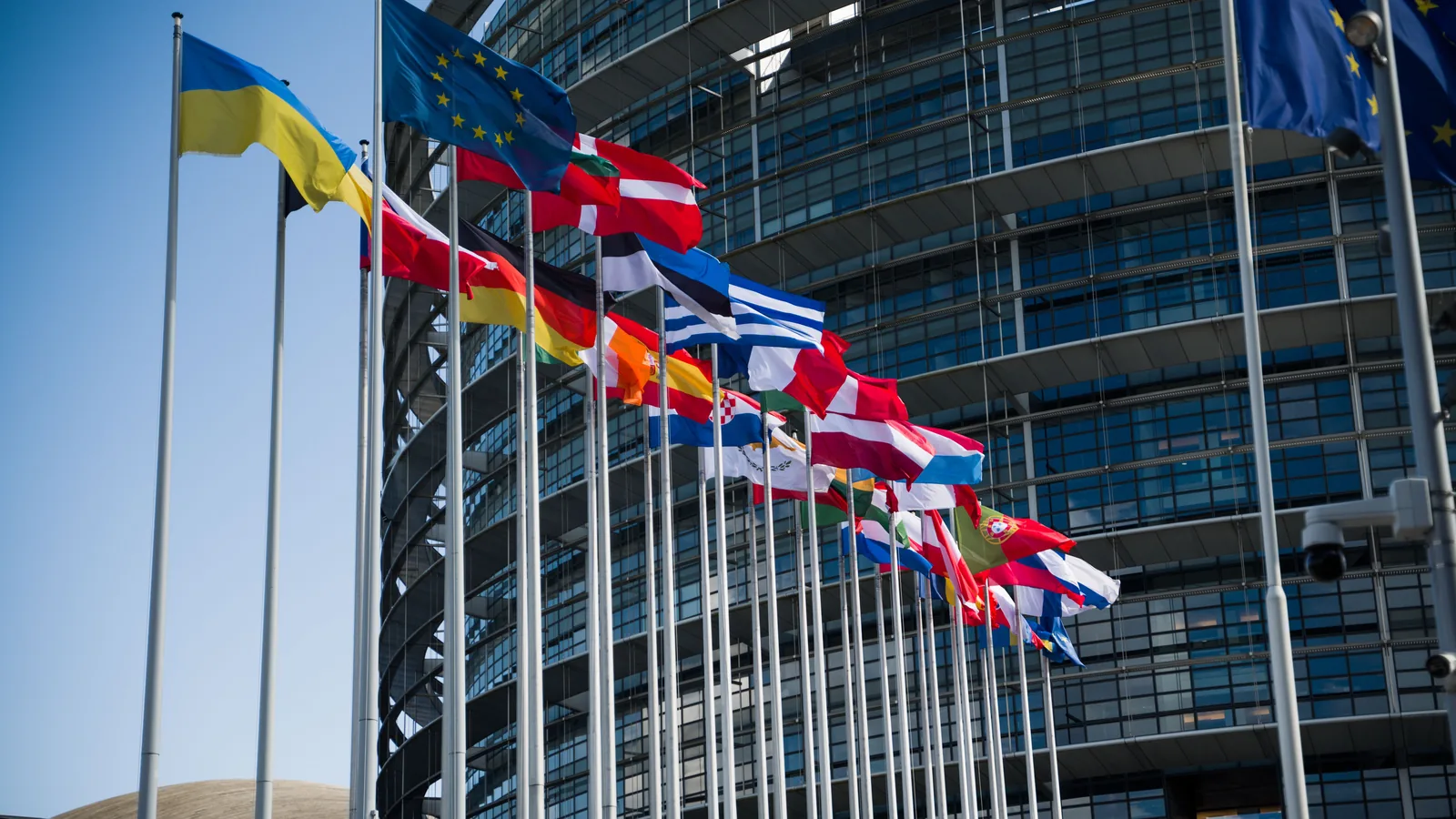
MiCA, Regulation (EU) 2023/1114, is the EU law governing crypto-assets other than unique NFTs and MiFID financial instruments. It splits into three separate regimes: asset-referenced tokens, e-money tokens, and every other crypto-asset that is neither. A fourth regime sits inside the same Regulation, under a different Title again: authorisation to provide a crypto-asset service, such as custody or running an exchange. Most people typing "MiCA licence" actually mean that fourth regime, and if that describes your project, go straight to our licensing service rather than reading on here. This page answers a narrower, and for a token issuer more useful, question: which of MiCA's own regimes applies to a specific project, an issuance, a stablecoin, a utility token, and what the Regulation itself demands before that token reaches the public. Nine Titles make up MiCAR. Title II covers "other" crypto-assets through a notification that no authority ever approves. Title III authorises asset-referenced tokens, folding a white paper's approval into the same decision. Title IV restricts e-money tokens to banks and electronic money institutions, on notice, with no approval step at all. CONSOB, Banca d'Italia and, once a token grows large enough, the European Banking Authority divide supervision by Title, not by a single "crypto regulator."

By Marta De Luca, Regulatory and Licensing Lead, Milan office. Marta De Luca works on authorisations: who has to be licensed in Italy, by which authority, and what the file has to contain. Four years inside the compliance function of an Italian payment institution taught her what a supervisor actually reads. She now takes crypto-asset and payment applicants through CONSOB and Banca d'Italia procedures.
Reviewed by Giulia Mancini, Head of Corporate Formation. Updated 11 September 2026.
What is MiCA (Regulation (EU) 2023/1114) and why does it matter for a crypto business in Italy?
Article 1(1) states the Regulation's own purpose in one sentence: uniform rules for offering and admitting to trading crypto-assets other than asset-referenced and e-money tokens, for the two token types themselves, and for the crypto-asset service providers built on top of them.
The Regulation's five objectives, in one sentence each
Article 1(2) lists five things MiCAR sets out to do: require disclosure for the issuance, offer and admission to trading of a crypto-asset; authorise and supervise crypto-asset service providers and the issuers of asset-referenced and e-money tokens; protect the holders of crypto-assets; protect the clients of crypto-asset service providers; and prevent market abuse involving crypto-assets (EUR-Lex: MiCAR, Article 1).
Nine Titles, one Regulation
MiCAR runs to nine Titles. Title I sets scope and definitions. Title II covers crypto-assets other than ART and EMT, disclosure only. Title III authorises asset-referenced tokens. Title IV restricts e-money tokens to banks and electronic money institutions. Title V, covered on our licensing page, authorises crypto-asset service providers. Title VI addresses market abuse, and Titles VII to IX cover the competent authorities, delegated acts and final provisions. A single phrase, "a MiCA licence," can mean any one of four different permissions, and confusing them is the fastest way to build the wrong application.
When MiCA started to apply, and Italy's own adaptation act
MiCAR applies generally from 30 December 2024, with Titles III and IV, the token-issuer rules, already in force earlier, from 30 June 2024. Italy adapted the Regulation into domestic law through Legislative Decree 5 September 2024 no. 129 (Normattiva: D.Lgs. 129/2024, Art. 2), which supplies the Italian definitions and names the domestic authorities each Title answers to.
Who MiCA catches, and the six blanket exclusions
The Regulation applies to natural and legal persons, and to certain other undertakings, engaged in issuing, offering to the public or seeking admission to trading of a crypto-asset, or in providing a crypto-asset service, anywhere in the Union. Six categories fall outside it entirely, regardless of activity: intra-group crypto-asset services between a parent and its subsidiary; an insolvency liquidator or administrator acting in that capacity; the ECB and national central banks acting as monetary authorities, or other public authorities of the member states; the European Investment Bank and its subsidiaries; the European Financial Stability Facility and the European Stability Mechanism; and public international organisations. Most readers of this page are none of the six. They are ordinary companies planning to issue or service a token, and for them company registration in Italy comes before any of the regimes below.
What does MiCA explicitly NOT cover?
Two categories sit outside MiCA by design, not by oversight, and each carries a real test rather than a label a founder can simply claim for itself.
The NFT exclusion: unique and not fungible with any other crypto-asset
MiCAR states the exclusion in one line: the Regulation does not apply to crypto-assets that are unique and not fungible with other crypto-assets (EUR-Lex: MiCAR, Article 2). Recital 10 gives the reasoning and two groups of examples: digital art and collectibles, and crypto-assets representing a unique, non-fungible service or physical asset, such as a product guarantee or a parcel of real estate. The common thread is that none of these can be valued by comparison against an existing market or an equivalent asset, unlike a fungible token traded in bulk.
The substance-over-form test: a large series or collection is not exempt
Recital 11 closes the obvious workaround. Fractional parts of a genuinely unique asset are not themselves unique. Issuing tokens as non-fungible in a large series or collection is treated on its own as an indicator of fungibility. A unique identifier attached to a token is not, by itself, sufficient to keep it outside MiCA. Authorities apply what the Recital calls a substance-over-form approach, looking at what the asset actually does rather than what its issuer calls it.
The MiFID and financial-services carve-out, ten items
A second, larger carve-out removes assets that already sit inside other EU financial-services law, under the same Article 2 cited above: financial instruments; deposits, including structured deposits; funds, unless they qualify as an e-money token; securitisation positions; life and non-life insurance products; pension products recognised under national law; occupational pension schemes; employer-mandated individual pension products; pan-European Personal Pension Products; and social security schemes. MiCAR itself does not draw the line with a financial instrument. ESMA guidelines do that, due by 30 December 2024, and an offeror carries the primary responsibility for classifying its own asset correctly, a call a competent authority can challenge before or after publication.
Utility tokens are inside MiCA, not outside it
A utility token, defined as one that only gives access to a good or service supplied by its own issuer, sits inside MiCA's Title II "other" category. It does not sit outside the Regulation. A narrower rule removes only the notification duty for a utility token already in operation, covered below; it does not remove MiCA's application to that token. Reading the utility-token label as an exemption from the whole Regulation is a mistake worth correcting early, since it drives a founder to skip conditions that still apply in full.
A two-box diagram. The left box, Inside MiCA, lists three items: asset-referenced tokens (ART); e-money tokens (EMT); and other crypto-assets, including utility tokens. The right box, Outside MiCA, lists seven items: unique, non-fungible NFTs; financial instruments; deposits; funds; insurance products; pension products; and social security schemes. A footnote arrow runs from the NFT item in the right box back toward the left box, labelled "unless issued in a large series: substance over form."
What are the three types of crypto-asset under MiCA: ART, EMT and "other"?
Everything MiCA regulates falls into one of three buckets, and which bucket a token lands in decides every procedural question that follows through the rest of this page.
Asset-referenced token (ART): pegged to a basket or more than one currency
An asset-referenced token is a crypto-asset that is not an e-money token and that purports to maintain a stable value by referencing another value or right, or a combination of them, including one or more official currencies (EUR-Lex: MiCAR, Article 3). A token backed by a basket of currencies, by a commodity, or by a mix of assets falls here.
E-money token (EMT): pegged to exactly one official currency
An e-money token purports to maintain a stable value by referencing the value of a single official currency. The dividing line from an ART is exactly that word "single": one official currency makes a token an EMT. A basket, several currencies, or a non-currency asset makes it an ART instead.
"Other" crypto-assets, including utility tokens: the residual bucket
CONSOB describes the third category plainly: an "other" crypto-asset is one that is neither an ART nor an EMT, and the utility token that gives access to goods or services from its own issuer falls inside it, a definition confirmed on the same CONSOB overview page cited further down this section. This is where most real token launches actually sit. An unpegged reward token, a governance token, or a token that unlocks a feature in an app tracks nothing, so none of them is an ART or an EMT.
Three columns compare ART, EMT and Other, including utility tokens, across three rows. Peg: ART is pegged to a basket or more than one official currency; EMT is pegged to one official currency only; Other is unpegged. Permission type: ART requires authorisation with the white paper approval folded in; EMT requires a bank or e-money institution to notify only, with no approval; Other requires notification only, and is never approved. Italian regulator: ART is supervised jointly by Banca d'Italia and CONSOB; EMT is supervised by Banca d'Italia alone; Other is supervised by CONSOB alone.
MiCA at a glance: scope, tokens and thresholds
| Requirement | Value | Article |
|---|---|---|
| MiCAR applies from | 30 December 2024 | Art. 149(2) |
| Titles III/IV (ART/EMT) apply from | 30 June 2024 | Art. 149(3) |
| Italian adaptation act | D.Lgs. 5 September 2024 no. 129 | n/a |
| "Other" token exemption, audience | fewer than 150 persons per member state | Art. 4(2)(a) |
| "Other" token exemption, value | EUR 1,000,000 per rolling 12 months | Art. 4(2)(b) |
| White paper notice before publication | at least 20 working days | Art. 8(5) |
| Retail right of withdrawal | 14 calendar days | Art. 13(1) |
| ART authorisation exemption threshold | EUR 5,000,000 average outstanding value / 12 months | Art. 16(2)(a) |
| ART authorisation decision | within 25 working days of the required opinions | Art. 21(1) |
| ART quarterly reporting threshold | issue value above EUR 100,000,000 | Art. 22(1) |
| EMT advance notice before offering | at least 40 working days | Art. 48(6) |
| Significant ART/EMT criterion | more than 10,000,000 holders, or above EUR 5,000,000,000 in value | Art. 43(1)(a)-(b) |
Three token types, three regimes: a notification that is never approved, an authorisation where approval is folded in, and an issuer restriction with no approval decision at all.
Who regulates crypto-assets in Italy under MiCA: CONSOB, Banca d'Italia, EBA or ESMA?
One phrase to retire early: "the regulator is CONSOB." Four authorities share the work, split by which Title of MiCAR is in play, not by the word "crypto" on its own.
The four authorities, one per Title
| Authority | Title(s) of MiCAR | Role | Source |
|---|---|---|---|
| CONSOB | Title II (sole); Title III (joint, conduct) | Receives "other" token white paper notifications with no power to require approval; supervises transparency, market conduct and holder protection for ART | consob.it |
| Banca d'Italia | Title IV (sole); Title III (joint, prudential) | Sole authority for e-money tokens; supervises risk containment and sound management for ART | consob.it |
| EBA | Title III/IV, once a token is "significant" | Classifies and then directly supervises a significant ART or EMT | eur-lex.europa.eu |
| ESMA | Cross-Title | Keeps the EU register publishing notified and approved white papers by the start date of the offer | eur-lex.europa.eu |
Not one crypto regulator: four, split by which Title of MiCA applies.
CONSOB: sole authority for "other" tokens, joint authority for ART market conduct
CONSOB is the only authority a Title II issuer ever files with, and it has no power to withhold approval from that filing, only to receive it. For an asset-referenced token, CONSOB's role narrows to market conduct and holder protection, working alongside Banca d'Italia rather than instead of it, a split confirmed on CONSOB: MiCAR, ART, EMT and "Other Than".
Banca d'Italia: sole authority for e-money tokens, joint authority for ART prudential risk
Banca d'Italia takes the opposite half of the same split. It alone receives EMT notifications, since only a bank or an e-money institution may issue one in the first place. For an ART, its role covers prudential risk and sound management, working jointly with CONSOB on the same file rather than instead of it.
EBA and ESMA: the EU-level layer
Two EU-level bodies sit above the two Italian authorities. The European Banking Authority classifies an ART or EMT as "significant" once it crosses a fixed set of scale thresholds (EUR-Lex: MiCAR, Article 43), covered in full further down this page, and then takes over direct supervision from Banca d'Italia or CONSOB. ESMA keeps the EU-wide register that publishes a white paper by the start date of the offer, the mechanism that makes an authorisation or a notification checkable from outside Italy.
Do I need to publish a white paper to launch a crypto-asset in Italy?
For an "other" crypto-asset the answer is usually yes, and the exceptions are narrower than most issuers assume on a first read of the question.
The white paper is a gate, not a licence
Article 4(1) sets seven conditions before any offer of an "other" crypto-asset reaches the public: a legal person stands behind the offer, that person has drawn up a white paper, notified it, published it, drafted any marketing communications to match, and complies with the offeror conduct duties of Article 14. Miss any one of the seven and the offer has not cleared the gate, whatever the token itself looks like.
Three size and audience exemptions from notification
Three narrow exemptions remove the notification duty itself, though legal-person status and Article 14 conduct still apply regardless: an offer reaching fewer than 150 persons per member state, an offer worth under EUR 1,000,000 over a rolling 12 months, or an offer made solely to qualified investors. None of the three removes an issuer's other obligations, only the paperwork of notifying a white paper.
Four cases where Title II does not apply at all
A separate, wider carve-out disapplies Title II altogether in four cases: a genuinely free offer, with an anti-avoidance rule against disguised fees or personal-data harvesting; an automatic reward for maintaining the distributed ledger; a utility token already in operation; or use restricted to a limited network of contracted merchants. The last of the four carries its own trip-wire: once consideration passes EUR 1,000,000, notification becomes mandatory after all.
Seeking admission to trading kills every exemption
None of the exemptions above survives the moment an offeror signals an intention to seek admission to trading for the token. From that point the full Title II regime applies from scratch, whatever the audience size or the offer value was until then.
What must a MiCA white paper contain, and does CONSOB approve it before publication?
A white paper is a disclosure document, built to a fixed template, and the single most common error in this area is treating its filing as if it were a licence application.

Ten mandatory content heads, including the climate and environmental impact disclosure
Article 6 fixes ten heads a white paper must cover: the offeror or the person seeking admission to trading; the issuer, if different from the offeror; the operator of the trading platform, where it drew up the paper; the crypto-asset project itself; the offer or the admission; the crypto-asset; the rights and obligations attached to it; the underlying technology; the risks involved; and the climate and environmental impact of the consensus mechanism used to issue it (EUR-Lex: MiCAR, Articles 4 to 15). That last item surprises founders used to a traditional prospectus, where nothing like it appears at all.
The mandatory "not approved" statement and the risk warnings
Every white paper opens with a fixed statement: it has not been approved by any competent authority in any member state, and the offeror alone is responsible for its content. Alongside it sit three mandatory risk warnings, that the crypto-asset may lose its value in part or in full, may not always be transferable, and may not be liquid. Information throughout has to be fair, clear and not misleading, with no assertion about future value beyond that risk statement.
Notification, not approval: the 20-working-day lead time and passporting the white paper
The white paper goes to the home member state's authority, which cannot require prior approval, at least 20 working days before publication, together with an explanation of why the token is neither excluded, an EMT nor an ART. From there the home authority forwards the file, and the list of host states, to those states' contact points and to ESMA within 5 working days, and ESMA lists the paper in its register by the start date of the offer.
After publication: withdrawal rights, refunds and offeror conduct duties
Once published, the offer runs across the whole Union with no further permission needed anywhere else. A retail buyer purchasing directly from the offeror keeps a 14-calendar-day right of withdrawal, with a full refund and no reason required, unless the token was already admitted to trading first. Offerors carry ongoing duties of honesty, fairness and clear communication, and if a time-limited offer is cancelled, holders are refunded within 25 calendar days. Superseded versions of a white paper stay public, marked invalid, for at least 10 years.
How does an asset-referenced token (ART) get authorised in Italy?
An ART issuer clears a higher bar than an "other" token issuer, and the reason is the stability promise it makes to holders.
Authorisation, not just a notification
Only a legal person or undertaking established in the Union and authorised under Article 21, or a credit institution complying with Article 17, may offer or seek admission to trading of an asset-referenced token (EUR-Lex: MiCAR, Articles 16 and 21). A notification, sufficient for an "other" token, does nothing for an ART.

The EUR 5,000,000 de minimis exemption
Authorisation is not required where, over a rolling 12 months, the average outstanding value of the ART never exceeds EUR 5,000,000, and the issuer is not linked to a network of other exempt issuers structured to sit under the same threshold together.
Authorisation and white paper approval are the same decision
Where an applicant issuer is authorised, its white paper "is deemed to be approved" in the same act, not in a second, separate procedure. In Italy that decision sits with Banca d'Italia, acting d'intesa con (in agreement with) CONSOB, per CONSOB: the ART and EMT Italian authorisation routes. The decision follows within 25 working days of receiving the required opinions, and the applicant is notified within 5 working days of that decision.
Grounds for refusal, and quarterly reporting above EUR 100,000,000
Refusal follows unfit management or shareholders, a threat to business continuity or market integrity, or a negative opinion from the central bank on monetary grounds, the same shape of test used for a service authorisation under a different Title. Once an ART's issue value passes EUR 100,000,000, the issuer reports quarterly on holder numbers, issued value, reserve size, and average daily transaction count and value.
Who can issue an e-money token (EMT) in Italy?
The EMT route is the narrowest of the three, a hard gate on who may even attempt it, not a procedure open to any willing applicant.
Only a bank or an e-money institution may issue an EMT
Two issuer types are eligible for an EMT, and no others: a credit institution or an electronic money institution, and only once each has notified its white paper to Banca d'Italia and published it (EUR-Lex: MiCAR, Article 48). An EMT is deemed to be electronic money by operation of law, and one referencing a member state's currency is deemed offered to the public inside the Union. A start-up with no banking or e-money authorisation cannot become an EMT issuer by any structuring choice. The nearest route open to it runs through Banca d'Italia authorisation as a payment institution or an e-money institution first.
A 40-working-day notice, and no separate approval decision
Issuers notify Banca d'Italia at least 40 working days before offering the EMT or seeking its admission to trading. Unlike an ART, there is no separate approval decision to wait for: the notification, plus the published white paper, is the whole gate.
Redemption at par, on request, with no fee
Holders carry a statutory claim against the issuer. A token is issued at par value on receipt of funds, and redeemable at any time, at par value, paid in funds, with no fee charged for the redemption itself.
Safeguarding at least 30% of funds received, and the marketing rules
At least 30% of funds received must sit in separate bank deposits, with the rest invested in secure, low-risk, highly liquid instruments denominated in the same currency the token references. Marketing communications for an EMT cannot run before the white paper is published, must name the issuer's website, phone number and email, and must state the redemption right, though they are not themselves subject to prior approval.
What happens if a crypto-asset becomes very large under MiCA?
Scale changes who supervises a token, a mechanism absent from every visible page ranking for this topic.
Seven scale criteria, at least three trigger significance
A token is classified as "significant" once it meets at least three of seven criteria: more than 10,000,000 holders; a value, market capitalisation or reserve above EUR 5,000,000,000; average daily transactions above 2,500,000 and average daily value above EUR 500,000,000; the issuer's status as a Digital Markets Act "gatekeeper"; significant international activity; interconnection with the wider financial system; or the same issuer running several ART or EMT tokens plus a crypto-asset service.
EBA classifies and takes over supervision, on a fixed clock
Once at least three criteria are met, the European Banking Authority classifies the token as significant, and supervisory responsibility transfers from the national authority to EBA within 20 working days of that classification. The same mechanism applies to e-money tokens by cross-reference to the same articles.
The non-euro currency-sovereignty carve-out
One carve-out keeps supervision at home. A non-euro significant e-money token stays with its national authority, rather than moving to EBA, where at least 80% of its holders and its transaction volume concentrate in its home member state.
How does MiCA's passporting let one authorisation open the whole EU?
A single design choice runs through every regime this page has covered, and it explains why the Regulation exists at all.
The design problem MiCA was built to solve
Before MiCAR, the absence of a single Union framework left companies with no legal certainty over how their crypto-assets would be treated from one member state to the next, a gap the Regulation's own recitals describe as a risk of regulatory fragmentation that would make cross-border scaling harder for any crypto business.
Three passporting mechanisms, one principle
Each regime carries its own version of the same idea. A notified "other" token's white paper opens the whole Union the moment it is published, with no second filing anywhere else. An ART's approved white paper travels to host member states on the strength of the home authorisation alone. A CASP's own authorisation, covered on our licensing page, carries the right of establishment and the freedom to provide services across the Union, mechanics this page does not repeat.
The EU register makes the passport visible
None of this would be checkable from outside Italy without ESMA's register. It carries both crypto-asset service providers and, for "other" token issuers, their white papers, published by the start date of the offer, so a counterparty anywhere in the Union can confirm a passport without asking the issuer for its own paperwork.
Is a MiCA white paper the same thing as a CASP licence in Italy?
One question closes this page: does publishing a white paper make a company a licensed crypto business? It does not.
A token offering and a crypto-asset service are two different gates
An "other" token issuer only ever notifies a white paper, a Title II obligation. Anyone separately providing a crypto-asset service related to that same token, custody, running an exchange, operating a trading platform, needs a CASP authorisation under Title V instead, unless the narrow custody-or-transfer carve-out for an already exempt token applies. The two gates sit in different Titles, answer to different tests, and neither substitutes for the other.
What our licensing service covers, and what stays on this page
Company forms, capital tiers, CONSOB's Article 63 procedure and the transitional period that ended on 1 July 2026 all belong to our licensing service; none of it is repeated here. One more decision often arrives alongside a token launch: protecting the brand a project is built on, which runs through UIBM rather than through MiCAR at all.
Penalties extend to unauthorised issuance too
Article 30 of the Italian decree does not stop at unauthorised CASP activity. It also punishes offering an asset-referenced token without authorisation, issuing an e-money token in breach of the Title IV reservation, and offering an e-money token without the issuer's written consent (Normattiva: D.Lgs. 129/2024, Art. 30), under the same imprisonment-and-fine bracket used for unauthorised crypto-asset services, stated in full on our licensing page rather than repeated here.
If you are weighing which of these regimes applies to a specific token, start the onboarding form and describe the project; a first read normally takes one conversation, not a formal file.
No fee has been published, in EUR-Lex or on CONSOB's own overview, for an ART authorisation or for an EMT notification. A supervisory fee does apply to the separate CASP route, and it is stated in full on our licensing page, not repeated here.
Accuracy note: this page states the position under the instruments cited, as published at the update date, and is not legal advice. A specific project should always be checked against the current text and the live ESMA register before acting. Sources verified 6 to 11 September 2026.
Frequently asked questions about MiCA in Italy
What does MiCA stand for and what does it regulate?
MiCA is Regulation (EU) 2023/1114, the Markets in Crypto-Assets Regulation. It sets uniform EU rules for offering and admitting crypto-assets to trading, for authorising and supervising issuers of asset-referenced and e-money tokens, and for authorising the crypto-asset service providers that build products on top of them.
What crypto-assets does MiCA NOT cover?
MiCA excludes crypto-assets that are unique and not fungible with any other crypto-asset, and crypto-assets that already qualify as financial instruments, deposits, funds, insurance products, pension products or social security schemes under existing EU financial-services law. Everything else falls inside the Regulation's scope.
Are NFTs automatically excluded from MiCA in Italy?
No. The exclusion is a substance test, not a label. A token issued as part of a large series or collection is treated as fungible in practice and falls back inside MiCA, whatever the issuer calls it. Only a genuinely unique, non-fungible asset stays outside the Regulation.
What is the difference between an ART, an EMT and an "other" crypto-asset?
An asset-referenced token is pegged to a value, right or basket other than a single official currency. An e-money token is pegged to one official currency and is deemed electronic money. Everything else, including a utility token that only gives access to a good or service, is an "other" crypto-asset under Title II.
Do I need to publish a white paper to launch a crypto-asset in Italy?
Usually yes, unless the offer is free, worth under EUR 1,000,000 over a rolling 12 months, aimed at fewer than 150 persons per member state, or a utility token already in operation used within a contracted merchant network. Seeking admission to trading removes every one of these exemptions.
Does CONSOB approve a crypto-asset white paper before it is published?
Not for an "other than" token: CONSOB cannot require prior approval, only a notification filed at least 20 working days before publication. An asset-referenced token's white paper is different: it is approved as part of the same decision that grants the issuer's authorisation.
Who authorises the issuer of an asset-referenced token in Italy?
Banca d'Italia, acting in agreement with CONSOB, under Article 21 of MiCAR. The authorisation decision and the approval of the issuer's white paper are the same act, not two separate procedures, and the decision follows within 25 working days of receiving the required opinions.
Can any company issue an e-money token in Italy?
No. Only a credit institution or an electronic money institution may issue an e-money token, and only after notifying Banca d'Italia at least 40 working days before offering it. There is no separate authorisation decision: the notification plus the published white paper is the gate.
Once a white paper is notified in one EU country, can the token be sold across the whole EU?
Yes, for "other than" tokens. After home-state notification and publication, the offeror may offer the crypto-asset throughout the Union with no separate approval needed in any other member state. The same single-authorisation principle also carries an approved ART white paper and a CASP licence across borders.
Does the EU ever take over supervision of a crypto-asset from the Italian authorities?
Yes. Once an asset-referenced or e-money token crosses at least three of a fixed set of scale thresholds, such as over 10 million holders or over EUR 5 billion in value, the European Banking Authority classifies it as significant and takes over direct supervision from the national authority.
Is a MiCA white paper the same thing as a CASP licence?
No. A white paper is an issuer's disclosure document for offering a crypto-asset to the public. A CASP authorisation is a separate permission, granted under a different Title of MiCAR, to provide crypto-asset services such as custody or running a trading platform. Our licensing service covers the CASP route in full.
Can I withdraw from a crypto-asset purchase after buying it?
A retail buyer purchasing an "other than" token directly from the offeror has 14 calendar days to withdraw, with a full refund and no reason required, provided the token was not already admitted to trading before the purchase.